

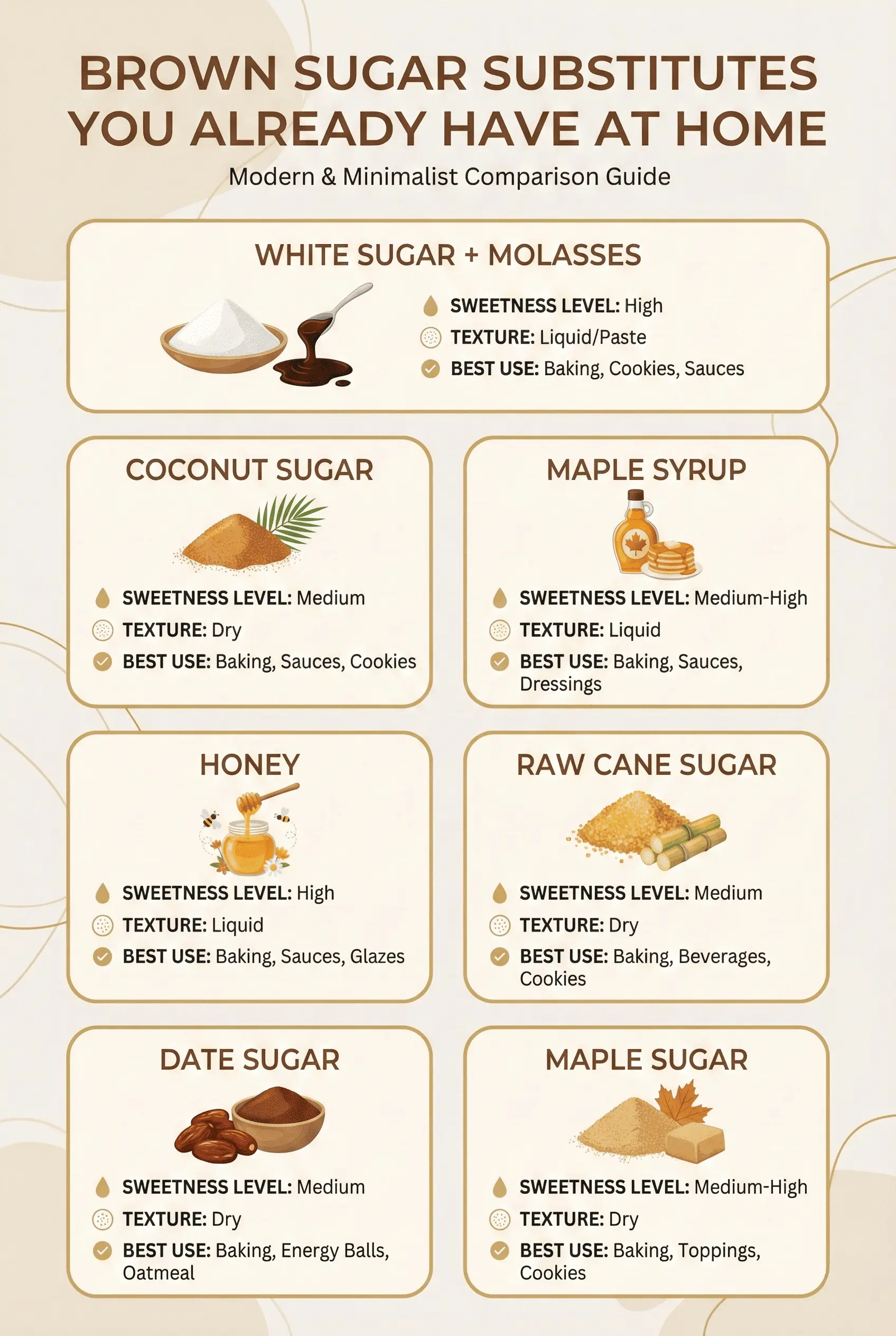
 Brown Sugar Substitute Options | recipesbybrad.comComprehensive visual guide showing 7 common brown sugar substitutes including white sugar with molasses, honey, maple syrup, coconut sugar, and other pantry staples with measurement ratios and best uses for baking and cooking.
Introduction
You’re halfway through a recipe when you realize you’re out of brown sugar. Do you set aside your mixing bowl and rush to the store? Not necessarily. With a few smart moves, you can find brown sugar substitutes you already have at home.
Whether you’re making chewy cookies, moist cakes, barbecue sauce, or savory glazes, several common kitchen ingredients can stand in for brown sugar without sacrificing taste or texture. The secret lies in understanding what makes brown sugar special—it’s simply white sugar combined with molasses—and replicating that combination with pantry staples.
In this comprehensive guide, you’ll discover practical swaps with exact measurements, learn how to adjust recipes for different substitutes, and understand which alternatives work best for specific applications. From the classic white sugar and molasses blend to creative options like maple syrup and coconut sugar, we’ll cover everything you need to keep baking without interruption.
Key Takeaways
- Brown sugar is white sugar mixed with molasses (6-10% molasses content), giving it moisture and caramel flavor
- You can recreate brown sugar perfectly using 1 cup white sugar + 1-2 tablespoons molasses
- Liquid sweeteners like honey, maple syrup, and agave work well but require reducing other liquids in recipes
- Coconut sugar, muscovado, and turbinado sugar offer dry 1:1 substitutes with similar texture
- Different substitutes work best depending on the recipe’s texture and flavor requirements
- Some swaps may slightly alter taste (honey adds floral notes, maple adds woodsy flavor) or moisture level
- Most substitutes can be mixed in under 2 minutes with everyday kitchen tools
- Understanding the role of brown sugar (moisture, acidity, flavor) helps you choose the right replacement
- Light vs. dark brown sugar can be replicated by adjusting molasses quantity
Understanding Brown Sugar and Its Role in Recipes
What Makes Brown Sugar Special?
Brown sugar is a staple in many kitchens, adding moisture, flavor, and color to both sweet and savory recipes. It’s white granulated sugar mixed with molasses—typically 6% molasses for light brown sugar and 10% for dark brown sugar. This combination creates several unique characteristics:
- Moisture retention: The molasses content keeps baked goods soft and chewy longer than white sugar alone
- Caramel flavor: Molasses adds deep, complex notes with hints of toffee and butterscotch
- Acidity: The slight acidity interacts with leavening agents for better rise and texture
- Color: Creates beautiful golden-brown hues in cookies, cakes, and sauces
- Texture: The moist crystals pack differently than white sugar, affecting density
When you’re out of brown sugar, don’t panic—many alternatives can mimic these qualities. Some work as direct replacements, while others might adjust your recipe’s flavor profile slightly. Understanding what brown sugar brings to a dish helps you choose the best substitute from ingredients you already have on hand.
Quick Reference: Brown Sugar Substitutes at a Glance
| Substitute | Ratio | Best For | Flavor Notes |
|---|---|---|---|
| White Sugar + Molasses | 1 cup sugar + 1-2 tbsp molasses | Everything (perfect match) | Identical to brown sugar |
| White Sugar + Maple Syrup | 1 cup sugar + 1 tbsp syrup | Baking, glazes, sauces | Woodsy, subtle maple |
| White Sugar + Honey | 1 cup sugar + 1 tbsp honey | Baking, marinades | Floral, slightly tangy |
| Coconut Sugar | 1:1 replacement | Baking, oatmeal, coffee | Mild caramel, hint of coconut |
| Muscovado Sugar | 1:1 replacement | Rich desserts, BBQ sauce | Intense molasses, toffee |
| Turbinado/Raw Sugar | 1:1 replacement | Crumb toppings, coffee | Mild molasses, crunchy |
| White Sugar + Agave | 1 cup sugar + 1 tbsp agave | Cookies, quick breads | Neutral, slightly sweet |
| Plain White Sugar | 1:1 replacement | Emergency only | Less moisture, no caramel |
Best Brown Sugar Substitutes: Detailed Guide
1. White Sugar and Molasses (The Perfect Match)
Best for: Any recipe calling for brown sugar—baking, cooking, sauces, marinades
Recipe:
- Light brown sugar: 1 cup (200g) white granulated sugar + 1 tablespoon (15ml) molasses
- Dark brown sugar: 1 cup (200g) white granulated sugar + 2 tablespoons (30ml) molasses
How to make it: Place white sugar in a bowl, add molasses, and mix vigorously with a fork or whisk for 1-2 minutes until the molasses is evenly distributed and the mixture looks uniformly tan. No clumps should remain.
Why it works: This is literally what brown sugar is—you’re recreating the commercial product at home. The result is chemically and functionally identical to store-bought brown sugar, making this the most reliable substitute for any application.
Tips:
- Use unsulphured molasses for the best flavor (sulphured can taste slightly bitter)
- Mix thoroughly—streaks of molasses will create uneven sweetness
- Make large batches and store in an airtight container for up to 6 months
- Works perfectly in chocolate chip cookies, oatmeal cookies, banana bread, and BBQ sauce
- If your molasses is very thick, warm it briefly to make mixing easier
2. White Sugar and Maple Syrup
Best for: Baking, glazes, marinades, and recipes where maple flavor is welcome
Recipe: 1 cup (200g) white sugar + 1 tablespoon (15ml) pure maple syrup
How to make it: Combine white sugar and maple syrup in a bowl, stirring until evenly mixed. The mixture will be slightly more moist than regular brown sugar.
Why it works: Maple syrup provides moisture and adds complex sweetness similar to molasses, though with woodsy, maple notes instead of caramel tones. It contains minerals and trace compounds that contribute to browning and flavor depth.
Tips:
- Use pure maple syrup, not pancake syrup (which is corn syrup with flavoring)
- Reduce other liquids in your recipe by 1-2 tablespoons per cup of substitute
- Excellent in oatmeal cookies, muffins, and autumn-spiced desserts
- The maple flavor is subtle and complements chocolate, nuts, and warm spices beautifully
- Grade A Dark or Very Dark maple syrup has the strongest flavor
3. White Sugar and Honey
Best for: Soft cookies, quick breads, granola, and marinades
Recipe: 1 cup (200g) white sugar + 1 tablespoon (15ml) honey
How to make it: Mix white sugar with honey until well combined. The honey will create a slightly sticky mixture.
Why it works: Honey adds moisture and mild acidity while providing golden color and complex sweetness. Its hygroscopic properties (attracting moisture) keep baked goods soft, similar to brown sugar.
Tips:
- Honey adds a subtle floral flavor—choose mild varieties like clover for neutral taste
- Reduce other liquids in your recipe by 1 tablespoon per cup of substitute
- Baked goods may brown faster due to honey’s high fructose content—reduce oven temperature by 25°F if needed
- Works wonderfully in granola bars, oatmeal cookies, and honey cake
- Do not give honey-containing foods to children under 1 year old
4. Coconut Sugar
Best for: Health-conscious baking, coffee sweetening, and recipes where slight coconut flavor is acceptable
Recipe: Use 1 cup (200g) coconut sugar to replace 1 cup brown sugar directly (1:1 ratio)
Why it works: Coconut sugar is made from coconut palm sap and has a similar moisture content, texture, and caramel-like flavor to brown sugar. It’s less processed and contains trace minerals, making it popular among health-conscious bakers.
Tips:
- Has a subtle coconut flavor that’s barely noticeable in most baked goods
- Lower glycemic index than regular sugar (around 35 vs. 65)
- Works beautifully in chocolate chip cookies, blondies, and oatmeal
- Slightly coarser texture—pulse in a food processor for smoother consistency if needed
- More expensive than white sugar, but worth keeping on hand
- Available at most grocery stores in the natural foods section
5. Muscovado Sugar
Best for: Rich, intense desserts, gingerbread, BBQ sauce, and recipes where deep molasses flavor shines
Recipe: Use 1:1 as a direct replacement for brown sugar
Why it works: Muscovado is unrefined cane sugar with all the molasses retained (8-10%), making it very moist and intensely flavored. It’s essentially “super brown sugar” with a toffee-like taste.
Tips:
- Use light muscovado for light brown sugar, dark muscovado for dark brown sugar
- Has a stronger molasses flavor than regular brown sugar—wonderful in gingerbread and spice cakes
- Very moist and clumpy—press through a sieve if needed
- Available at specialty stores or online (brands like India Tree or Billington’s)
- Perfect for British-style sticky toffee pudding and treacle tart
6. Turbinado or Raw Sugar
Best for: Crumb toppings, coffee sweetening, and recipes where texture matters
Recipe: Use 1:1 to replace brown sugar, though texture will be crunchier
Why it works: Turbinado sugar (also called raw sugar or Sugar in the Raw) retains some molasses on the surface, giving it a light caramel flavor. The larger crystals add pleasant crunch.
Tips:
- Best for sprinkling on muffin tops, coffee cakes, and crumb toppings where crunch is desirable
- Less moist than brown sugar—may result in slightly drier baked goods
- Pulse in a food processor if you need finer texture for mixing into batters
- Won’t dissolve as easily in cold liquids
- Mild molasses flavor—less intense than brown sugar
7. White Sugar and Agave Nectar
Best for: Vegan baking, cookies, and quick breads
Recipe: 1 cup (200g) white sugar + 1 tablespoon (15ml) agave nectar
How to make it: Combine white sugar and agave nectar in a bowl, stirring until evenly mixed. The mixture will be slightly more moist than regular brown sugar.
Why it works: Agave nectar adds moisture and neutral sweetness without strong flavor, making it versatile. It’s also vegan, unlike honey.
Tips:
- Very neutral flavor—won’t compete with other ingredients
- Reduce other liquids by 1 tablespoon per cup of substitute
- Agave is sweeter than sugar, so the overall sweetness may increase slightly
- Works well in cookies, brownies, and quick breads
- Available in light or dark varieties; light is more neutral
8. Plain White Sugar (Emergency Only)
Best for: When you truly have no other options
Recipe: Use 1:1 but expect different results
Why it works (sort of): White sugar provides sweetness but lacks the moisture, acidity, and caramel flavor of brown sugar. Your recipe will still work but with noticeable differences.
What to expect:
- Cookies will be crisper and spread more, losing chewiness
- Baked goods will be slightly drier and lighter in color
- Sauces and glazes will lack depth and complexity
- Overall sweetness perception may be sharper, less rounded
How to improve it:
- Add 1 tablespoon of water or milk per cup of white sugar to restore some moisture
- Increase vanilla extract by ½ teaspoon for added flavor complexity
- Consider adding a pinch of salt to enhance sweetness perception
How to Choose the Right Brown Sugar Substitute
Step 1: Identify What You’re Making
Different recipes benefit from different substitutes based on their requirements:
- Chewy cookies (chocolate chip, oatmeal): White sugar + molasses, coconut sugar, or white sugar + maple syrup
- Cakes and quick breads: Any substitute works; white sugar + honey or maple syrup add extra moisture
- BBQ sauce and glazes: White sugar + molasses or muscovado for authentic flavor
- Marinades: White sugar + honey or maple syrup complement savory ingredients
- Crumb toppings: Turbinado sugar for pleasant crunch
- Caramel or toffee: Stick with white sugar + molasses for predictable results
Step 2: Consider Flavor Compatibility
Think about whether added flavors complement your recipe:
- Maple syrup: Beautiful with nuts, autumn spices, chocolate, and oats
- Honey: Perfect with citrus, ginger, almonds, and berries
- Coconut sugar: Pairs well with chocolate, tropical flavors, and warm spices
- Molasses: Classic with ginger, cinnamon, and robust flavors
Step 3: Adjust for Liquid Content
When using liquid sweeteners (honey, maple syrup, agave), balance moisture:
- Reduce other liquids in recipe by 1-2 tablespoons per cup of substitute
- If recipe has no other liquids, you may need to add 1-2 tablespoons flour to compensate
- Watch baking time—extra moisture may require 2-3 minutes longer
- Baked goods may brown faster—tent with foil if needed
Recipe-Specific Brown Sugar Substitute Recommendations
For Chocolate Chip Cookies
Best choice: White sugar + molasses (1 cup sugar + 1.5 tablespoons molasses)
Why: Creates the perfect chewy texture and caramel notes that make chocolate chip cookies irresistible.
Tip: Chill dough for 30 minutes before baking for thicker, chewier cookies.
For Oatmeal Cookies
Best choice: Coconut sugar or white sugar + maple syrup
Why: Both complement the hearty oat flavor beautifully. Coconut sugar adds subtle caramel notes, while maple syrup creates wonderful depth.
Tip: If using maple syrup, reduce milk or water in recipe by 1 tablespoon.
For BBQ Sauce
Best choice: White sugar + molasses or muscovado sugar
Why: The robust molasses flavor stands up to smoky, tangy BBQ ingredients and creates authentic Southern-style sauce.
Tip: Use dark molasses (not blackstrap unless you want very intense flavor).
For Banana Bread
Best choice: White sugar + honey or coconut sugar
Why: The extra moisture keeps banana bread soft for days, and both flavors complement bananas perfectly.
Tip: Reduce milk by 1 tablespoon if using honey.
For Cinnamon Rolls
Best choice: White sugar + molasses
Why: Creates the classic gooey, caramelized filling that makes cinnamon rolls special.
Tip: Mix 1 cup sugar with 1.5 tablespoons molasses plus cinnamon for perfect filling.
For Baked Beans
Best choice: White sugar + molasses or maple syrup
Why: Both provide the sweet-savory balance beans need. Molasses is traditional; maple syrup adds New England flair.
Tip: Start with less than the recipe calls for—you can always add more sweetness.
For Crumb Topping
Best choice: Turbinado sugar or coconut sugar
Why: The coarser crystals create satisfying crunch and beautiful sparkle on muffins and coffee cakes.
Tip: Mix with cold butter and flour, then sprinkle generously before baking.
For Glazed Ham
Best choice: White sugar + honey or maple syrup
Why: Creates beautiful caramelization while adding complementary flavors that enhance the ham’s saltiness.
Tip: Apply glaze during the last 30 minutes of cooking for best results.
For Pecan Pie
Best choice: White sugar + molasses (dark brown sugar ratio: 2 tablespoons molasses)
Why: The deep molasses flavor creates the characteristic richness pecan pie is known for.
Tip: Use dark molasses for traditional flavor, or try maple syrup for a twist.
Expert Tips for Perfect Results
Measure Brown Sugar Correctly
Brown sugar should be packed firmly into the measuring cup—this is true for your homemade substitutes too. Pack the mixture into the cup and level off the top. This ensures you’re using the correct amount and your recipes turn out as intended.
Store Homemade Brown Sugar Properly
If you make white sugar and molasses mixture in advance, store it in an airtight container. Add a terra cotta sugar saver disk or a piece of bread to keep it moist and prevent hardening. It will keep for up to 6 months at room temperature.
Soften Hardened Brown Sugar Substitutes
If your coconut sugar or turbinado sugar clumps, microwave it for 10-15 seconds with a damp paper towel on top. The moisture will soften the crystals. Alternatively, store with a slice of bread overnight.
Adjust Baking Time for Liquid Substitutes
When using honey, maple syrup, or agave, your baked goods may need an extra 2-3 minutes in the oven due to increased moisture. Test for doneness with a toothpick before removing from the oven.
Don’t Overmix When Using Substitutes
Some substitutes (especially liquid ones) can make batters slightly thinner. Overmixing develops gluten and can lead to tough baked goods. Mix just until ingredients are combined for tender results.
Consider the Color Impact
Brown sugar adds color to baked goods. If using plain white sugar in a pinch, your cookies or cakes will be paler. This doesn’t affect taste significantly but changes appearance. For presentation purposes, dust with cocoa powder or cinnamon sugar to add visual appeal.
Scale Recipes Carefully
When doubling or halving recipes with substitutes, maintain the same proportions. For example, if a recipe calls for 2 cups brown sugar and you’re using white sugar + molasses, use 2 cups sugar + 2-4 tablespoons molasses (depending on light or dark brown sugar needed).
Test Before Committing
If you’re trying a new substitute in a special recipe, do a small test batch first. Bake 2-3 cookies or make a mini version before committing to the full recipe. This saves ingredients and ensures you’re happy with the results.
Temperature Matters for Mixing
When combining white sugar with molasses or other liquid sweeteners, slightly warm liquids mix more easily. If your molasses is very thick and hard to pour, place the container in warm water for a few minutes or microwave for 10-15 seconds. This makes mixing much easier and ensures even distribution throughout the sugar.
Watch for Faster Browning
Recipes made with honey, maple syrup, or unrefined sugars brown faster than those with regular brown sugar due to their higher fructose content and mineral composition. If your baked goods are browning too quickly on top but aren’t done in the center, tent them with aluminum foil for the remaining baking time. Alternatively, position your oven rack one level lower than usual.
Keep Common Substitutes Stocked
To avoid future brown sugar emergencies, keep a bottle of molasses in your pantry—it lasts for years and allows you to make perfect brown sugar anytime. Alternatively, stock coconut sugar or turbinado sugar as backup options. These have long shelf lives and serve double duty in coffee, oatmeal, and baking.
Frequently Asked Questions
How do I make brown sugar from scratch if I don’t have molasses?
If you don’t have molasses, you can create brown sugar substitutes using other liquid sweeteners combined with white sugar. Mix 1 cup white sugar with 1 tablespoon of maple syrup, honey, or agave nectar as alternatives. Each will add moisture and complexity similar to molasses, though with different flavor profiles. Maple syrup adds woodsy notes, honey contributes floral sweetness, and agave offers neutral sweetness. Remember to reduce other liquids in your recipe by 1-2 tablespoons when using these liquid sweeteners. For completely dry substitutes without any additions, use coconut sugar, muscovado sugar, or turbinado sugar in a 1:1 ratio.
What’s the healthiest brown sugar substitute?
Coconut sugar is often considered the healthiest brown sugar substitute because it has a lower glycemic index (35 vs. 65 for regular sugar) and contains trace minerals like iron, zinc, calcium, and potassium, plus antioxidants. However, it’s still sugar and should be consumed in moderation. Other relatively healthier options include pure maple syrup (contains minerals and antioxidants) and raw honey (contains enzymes and antioxidants, though these are destroyed by heat). Muscovado sugar retains more minerals than refined sugars. Keep in mind that while these alternatives may offer marginal nutritional benefits, they’re all forms of sugar and contribute similar calories—the “healthiest” approach is simply using less sweetener overall.
Can I use brown sugar substitutes in savory recipes?
Absolutely! Brown sugar substitutes work excellently in savory applications like BBQ sauce, glazes, marinades, baked beans, and Asian-style stir-fry sauces. For savory dishes, the best choices are white sugar mixed with molasses (for authentic flavor), maple syrup (adds depth to glazes and marinades), or honey (great for balancing spicy or tangy flavors). Coconut sugar and muscovado also work well in savory contexts. The caramel notes from these substitutes complement smoky, spicy, and umami flavors beautifully. Start with slightly less than the recipe calls for in savory applications, as you can always add more sweetness but can’t remove it.
Why did my cookies turn out differently with a brown sugar substitute?
Cookies can turn out differently with substitutes for several reasons. If you used plain white sugar, your cookies likely spread more and became crispier because white sugar lacks the moisture that creates chewiness. If they’re too soft or didn’t spread enough, you may have used too much liquid sweetener without reducing other liquids in the recipe. If they taste different, certain substitutes like coconut sugar, maple syrup, or honey add their own flavor notes. If they’re darker than expected, liquid sweeteners and unrefined sugars cause faster browning. To fix these issues: use white sugar + molasses for best results, reduce other liquids when using honey or maple syrup, and lower oven temperature by 25°F if using liquid sweeteners to prevent over-browning.
Can I use only white sugar as a brown sugar substitute?
Yes, you can use white sugar alone in an emergency, but your results will differ noticeably from the original recipe. Plain white sugar lacks the moisture, acidity, and caramel flavor that brown sugar provides. Cookies will be crisper rather than chewy, cakes will be slightly drier, and the overall flavor will be less complex. For better results, add 1 tablespoon of water or milk per cup of white sugar to restore some moisture, or better yet, mix the white sugar with molasses, honey, or maple syrup to more closely replicate brown sugar’s characteristics.
Will using honey or maple syrup change my recipe?
Yes, both honey and maple syrup will add subtle flavor notes and increase moisture in your recipe. Honey contributes floral, slightly tangy notes, while maple syrup adds woodsy, caramel-like flavor. To accommodate the extra liquid, reduce other liquids in your recipe by 1-2 tablespoons per cup of substitute used. Additionally, baked goods may brown faster due to the higher fructose content in honey and maple syrup, so watch your baking time and consider reducing oven temperature by 25°F if needed. These changes are usually welcome additions that enhance flavor complexity.
Is coconut sugar a direct replacement for brown sugar?
Yes, coconut sugar is one of the best direct 1:1 replacements for brown sugar in most recipes. It has similar moisture content, texture, and caramel-like flavor, making it nearly interchangeable. Coconut sugar is made from coconut palm sap and contains trace minerals, with a lower glycemic index (around 35 compared to regular sugar’s 65). While it does have a subtle coconut flavor, this is barely noticeable in most baked goods and actually complements chocolate, nuts, and warm spices beautifully. The main drawback is that it’s more expensive than white sugar, but it’s an excellent option to keep in your pantry for both baking and cooking.
What’s the difference between light and dark brown sugar substitutes?
The difference lies in molasses content. Light brown sugar contains about 6% molasses (1 tablespoon per cup of white sugar), giving it a mild caramel flavor and lighter color. Dark brown sugar has about 10% molasses (2 tablespoons per cup of white sugar), resulting in a deeper color, more intense molasses flavor, and slightly more moisture. For most recipes, light brown sugar is the default choice. Use dark brown sugar when you want robust molasses flavor, such as in gingerbread, baked beans, BBQ sauce, or rich chocolate desserts. You can adjust the amount of molasses in your homemade substitute to match what your recipe needs.
Can I substitute brown sugar in cookie recipes without affecting texture?
Yes, you can substitute brown sugar in cookie recipes with minimal impact on texture if you choose the right replacement. The best options are white sugar mixed with molasses (1 cup sugar + 1-1.5 tablespoons molasses) or coconut sugar used 1:1. Both maintain the moisture content that creates chewy cookies. If using plain white sugar only, your cookies will spread more and turn out crispier rather than chewy because white sugar lacks the moisture and hygroscopic properties of brown sugar. To compensate when using only white sugar, reduce baking temperature by 25°F and remove cookies from the oven when edges are set but centers still look slightly underdone—they’ll continue firming up as they cool.
Does brown sugar substitute affect baking time?
Baking time can be slightly affected depending on which substitute you use. Liquid substitutes like honey, maple syrup, or agave add extra moisture, which may require an additional 2-3 minutes of baking time. Check for doneness with a toothpick or by gently pressing the center of cakes or muffins. Dry substitutes like coconut sugar, muscovado, or turbinado sugar typically don’t change baking time significantly. However, recipes made with these substitutes may brown faster due to their mineral content, so watch your baked goods during the last few minutes and tent with foil if they’re browning too quickly. White sugar alone may actually reduce baking time slightly since it lacks moisture.
Conclusion
Running out of brown sugar doesn’t have to disrupt your baking or cooking plans. With these simple swaps using ingredients you likely already have, you can keep your recipes on track and even discover new flavors along the way.
The key takeaway is that the white sugar and molasses combination is your most reliable substitute, creating results virtually identical to store-bought brown sugar. For those seeking variety, coconut sugar offers a healthy alternative with a lower glycemic index, while maple syrup and honey add unique flavor dimensions that can enhance your recipes in unexpected ways.
Remember to adjust liquid content when using liquid sweeteners, pack your substitutes properly when measuring, and don’t be afraid to experiment with different options. Most substitutes work in a 1:1 ratio, making the swap simple and stress-free. Whether you’re whipping up a batch of chocolate chip cookies, glazing a holiday ham, mixing barbecue sauce for summer grilling, or baking banana bread for breakfast, you now have the knowledge to confidently substitute brown sugar without compromising quality.
The beauty of understanding these substitutes is that they’re not just emergency solutions—they’re opportunities to customize recipes to your dietary needs and flavor preferences. Vegan bakers can use maple syrup or agave, health-conscious cooks can choose coconut sugar, and traditionalists can stick with the classic molasses blend.
Next time you find your brown sugar jar empty or rock-hard, try one of these substitutes and enjoy the results. Keep this guide bookmarked for quick reference whenever you need it. Share your favorite brown sugar hack with fellow home cooks, and remember that great baking is about understanding ingredients and having the confidence to adapt. With these tools in your knowledge toolkit, you’ll never let a missing ingredient stop you from creating delicious homemade treats.
Happy baking, and may your cookies always be chewy, your cakes always moist, and your pantry always ready for whatever recipe inspiration strikes!